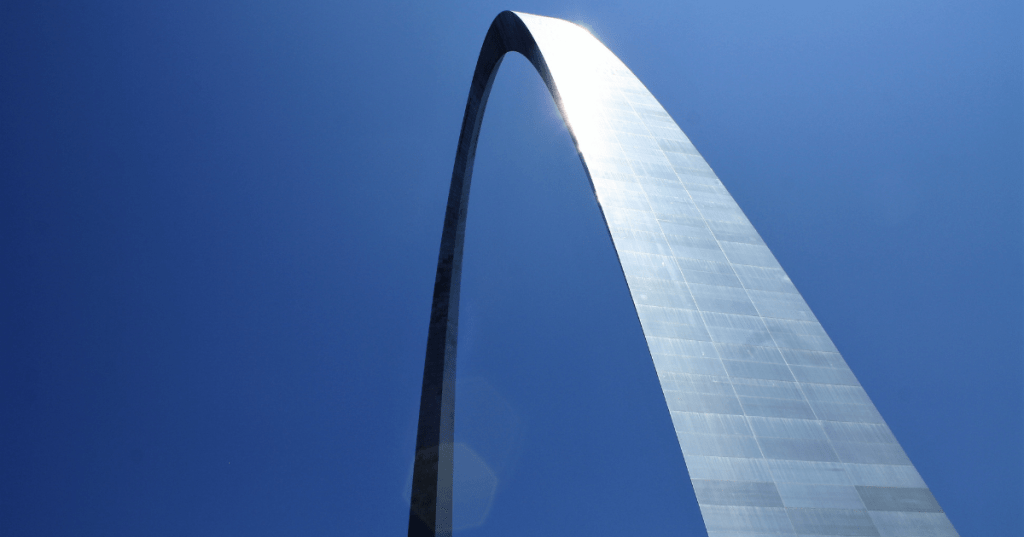
This short piece was a doctoral assignment. It is a joint response to Tracy K. Smith’s Life on Mars and Brian Doyle’s “Joyas Voladoras.”
As I enter the museum, I am immediately struck by how quiet it is. It’s a weekday, I remind myself, so I probably should have expected the low-key atmosphere. I take time to pause just inside the doors to survey the area. A family of five is standing at the welcome desk, the three children registering their impatience with their mother while her husband is asking the employee for information. A couple wanders past, Starbucks in hand, as they exit one exhibit and softly decide which to enter next. A group of older women laugh at a joke one of them has just told before quickly shushing each other, still giggling, as they wander to read the next plaque and resume their gossip.
It has been so long since I have visited that I can’t decide which area to visit first. I finally reason that I should go see the one that describes the origin of where I’m standing. I amble to the entrance of the exhibit, where an attentive guide greets me.
“Welcome to the Gateway Arch Museum,” he smiles. “Is this your first time with us?”
I chuckle. “It isn’t, although it’s probably been over twenty years since I’ve been here.”
He raises his eyebrows. I steal a glance at his nametag, which reads MARK. “Ah,” Mark replies, “well, I haven’t been working here that long, so I couldn’t tell you exactly what may have changed since then. But if you have any questions, please let me know.”
“Thank you.” I glance toward the exhibit that I’ve chosen, which is all about the construction of the Arch, the soaring structure that stands on the ground under which the museum has been built. “When I was in seminary, my friends and I liked to come here. We were broke, so free stuff like this, the Zoo, and the Muny were high on our lists of activities.”
“Oh, you went to seminary?” Mark seems genuinely interested. “One of my college friends went to Concordia. Did you go there?”
I smile. “Oh, no. I went to Eden.”
He nods in recognition. “Webster Groves. I like some of their restaurants.”
“They do have some good ones,” I agree, while looking back toward the models depicting the construction. “I always found it funny that the only times I actually went up into the Arch was when family or friends came in from out of town. I never felt the need to go up there on my own, or with my classmates.”
“I relate,” Mark says. “I’ve been here at the museum for about seven years, and I’ve only gone up once. It was fine, although those little pods can be nerve-wracking. I prefer to be on the ground.”
“Same here,” I laugh. “It’s a great view, but I don’t need to see it very often.” I’m still surveying the models, and I notice one depicting the completed Arch overlooking the Mississippi. A miniature version of downtown St. Louis sits on the other side of it.
“‘The old city in passive decline,'” I mutter.
Mark leans over slightly. “What was that?”
My eyes widen. “Sorry! I didn’t think you heard me. It’s a line from a poem I read recently.”
Mark folds his arms. “I’m into poetry! Any chance I’ve heard of it?”
I shrug. “Tracy K. Smith. She was a Poet Laureate. It’s from her book Life on Mars. I don’t really know much more about her than what I read in it.”
Mark shakes his head. “Can’t say I’m familiar.”
“That’s okay.” I pause for a moment, wondering how deep I want to go from here. “It’s…uh…she wrote a poem imagining murder victims visiting national landmarks and writing postcards to their killers.” I stop to gauge his reaction, but he still seems engaged. “Anyway, she chose George Tiller, the abortion doctor? And he’s sending a postcard from the Arch. He mentions that he can mostly see a stadium, and ‘the old city in passive decline.’ And then he says he can feel it sway as he looks out the window, which now that I think about it, is probably another reason I didn’t go up there very often.”
We share a laugh at that before Mark says, “I don’t know about decline. I mean, we still have some things going for us. Although I have to say that people are still working through some major events.”
I nod solemnly. “I could guess. One of my field placement churches was in Florissant, not too far from Ferguson.”
Now Mark nods. “That’s the one.”
“I was glued to the news when all of that happened. It was painful to watch from afar. This city that helped shape me in so many ways. I mean, the education was fantastic, but just being here, being exposed to different cultures, learning about the longstanding racial rifts…that helped form my sense of justice and community, and what God might have to say about it in real time.”
I realize how uncharacteristically forthright I’ve been for the past few minutes and pull myself back. Mark looks at me expectantly, as if to encourage me to keep going.
“Anyway,” I continue, “I’m not sure about decline, either. I hear from St. Louis friends regularly about the movements that they’re a part of here, and I know that there’s a long way to go, but I’m hopeful for them, for you, for all of it.”
Mark’s eyes soften. “That’s awesome. I’m glad you still feel a connection here.”
“Definitely.” I take a breath to recoup after being so vulnerable. My eyes wander toward the other exhibits that I can see. My gaze lingers on the entrance to the New Frontiers exhibit, which features several life-size replicas of various animals. Before I can stop myself, I blurt out, “Did you know that a buffalo’s heart is about the size of a basketball?”
Mark’s eyebrows shoot up. “Well, this conversation took a turn.”
I wince. “Sorry. I knew that I’d see that buffalo statue and looked it up before I came here. That still seems random, doesn’t it? I just…around the same time I read Smith’s book, I read another article about animals’ hearts, and that sent me down a rabbit trail to look up facts about different hearts. A rabbit’s heart, by the way, is about the size of a strawberry.”
“I’ve learned two new things today.” Mark smiles in appreciation.
“Of course, the article wasn’t really about animal hearts,” I hasten to add. “It was really about our own hearts. What they can handle, what they can hold, what we try to shield it from and what we can’t. To be honest, that was another lesson that I learned here, and one that I’ve learned over many years of ministry and of raising a family. You can’t fully prepare your heart for anything. I think St. Louis is where I finally began to realize and accept that, but having sat with so many people in crisis, in despair, voicing their doubts, letting me share in joy…I’ve never been able to get used to it, because each time I see it, it’s different. A unique human life experiencing it in a unique human way. And I have to be honest, it’s worn me out a few times. Like, majorly worn me out. And yet I keep coming back to it. I can’t quit it, no matter how hard I’ve wanted to.
“It’s just like you said about this city. ‘We still have some things going for us.’ And whatever those things are, that’s what you old onto. That’s what keeps you moving, and engaged, and knowing that it’s worthwhile and important.”
Mark takes this all in, raising his gaze to the ceiling in thought, before looking back at me. “Those worthwhile and important things are what keep the heart beating.”
I gasp. “Yes!” I exclaim, startling a few from the group of women. “I couldn’t have put it better!”
After this, our conversation turns to lighter topics such as how the Cardinals are doing, and what restaurants along the river he might recommend for dinner before the family of five hurries over to ask Mark about where the bathrooms are. I wish him a quick farewell before wandering into the Arch exhibit, preparing for another series of memories to bubble up in my heart before long.

